
Hospitality
Restaurant OS: the whole restaurant in one system
Our operating system for restaurants: an ordering site, a floor run by waiters, screens for the kitchen and the bar, delivery, stock and figures, and a team app on Android and iOS. Erra, Pizza pe Bune and Prestij run on it.
- Client
- Restaurant OS · Erra, Pizza pe Bune, Prestij
- Sector
- Hospitality
- Published
The scale
- tables and seats at Erra, pub and terrace
-
39 / 196
tables and seats at Erra, pub and terrace
- items on Erra's menu, kitchen and bar
-
213
items on Erra's menu, kitchen and bar
- towns in Erra's delivery area
-
25
towns in Erra's delivery area
- orders at Pizza pe Bune, first 2 months
-
469
orders at Pizza pe Bune, first 2 months
- delivered value at Pizza pe Bune
-
64,230 lei
delivered value at Pizza pe Bune
- ways in, a single order flow
-
5 → 1
ways in, a single order flow
Erra: configuration in the system, 18 October 2026. Pizza pe Bune: native orders, 5 Aug–7 Oct 2026, published with the client's consent. The flow: from the platform's code.
What it solves
-
Do your waiters spend the evening walking between the table, the kitchen and the bar?
The order leaves the phone in waves and lands on the station's screen. The app tells the waiter when it is ready.
The floor: shifts, tables and waves -
Is the kitchen still working from paper slips and shouting?
Each station has its own screen and sees only its own work, from every way in, in the order it arrived.
Kitchen and bar, each on its own screen -
Do guests have to wait for a waiter before they can order?
They order on the website for delivery or pickup, or from the QR code on the table. The waiter confirms the request.
The guest's order: the website and the table QR -
Is delivery still coordinated over the phone?
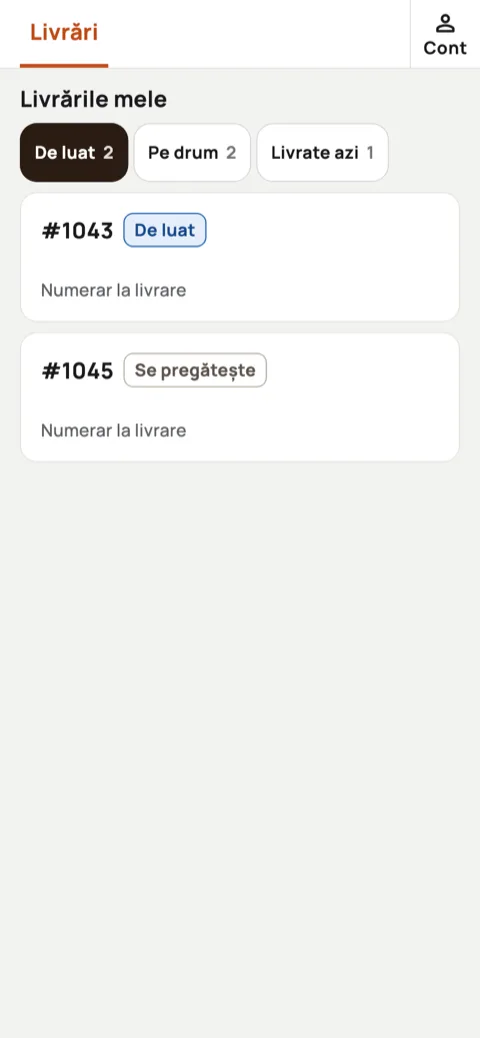
The courier picks the order up in the app, starts navigation and marks departure and handover. The restaurant sees each stage as it happens.
Delivery and the courier -
Does the owner only learn how the evening went the next day?
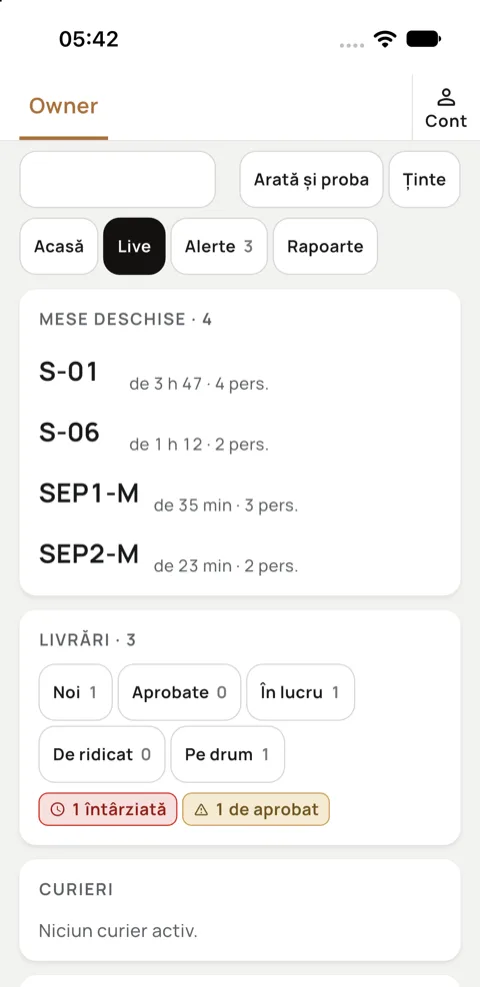
The owner's app shows open tables and sales live, from the same figures as the dashboard.
The figures, from a single source -
Running more than one restaurant?
Each one runs separately on the same platform, with its own data, menu and domain: Erra, Pizza pe Bune, Prestij.
Four restaurants, one system
Four restaurants, one system
Restaurant OS is our operating system for restaurants: one platform on which every restaurant keeps its own data, menu, domain and settings. Pizza pe Bune, a delivery pizzeria in Predești, has run on it since August 2026. Restaurant Prestij and Trattoria Prestij in Ploiești take their online orders through it. Erra Restaurant & Cocktail Bar, also in Ploiești, is the newest and the most fully configured, with a pub and a terrace, kitchen and bar screens, delivery across Ploiești and the towns around it, a daily menu, stock tracking and the team app.
How an order travels
There are five ways in: the website, an operator on the phone, a waiter in the app, the QR code on the table and the bar screen. All of them reach the same placement gate, which creates the order and puts it on one line of states: placed, accepted, in progress, ready, then served or delivered. Each line goes to the station that makes it, kitchen or bar, by product. Screens and the app update in real time, and a closed order counts towards the day's figures. A new channel means a new door to the same gate, not a new system.
The guest's order: the website and the table QR
The restaurant's website is also where people order. It has a menu with allergens and options, a basket, and delivery or pickup, with the delivery area and opening hours checked in the basket. At the table, the guest scans the QR code, picks from the menu and sends the order. The request reaches the waiter, who confirms, changes or declines it before it goes to the stations. The guest has nothing to install.
The floor: shifts, tables and waves
Waiters start their shift on the phone, find their tables on the floor plan and open a table. Orders go out in waves, starters first and the rest once the table has decided. Each wave reaches the stations whole. The bill is worked out across every wave at the table, and payment is recorded as cash or card. Tables can be moved and joined without losing the bill.
Kitchen and bar, each on its own screen
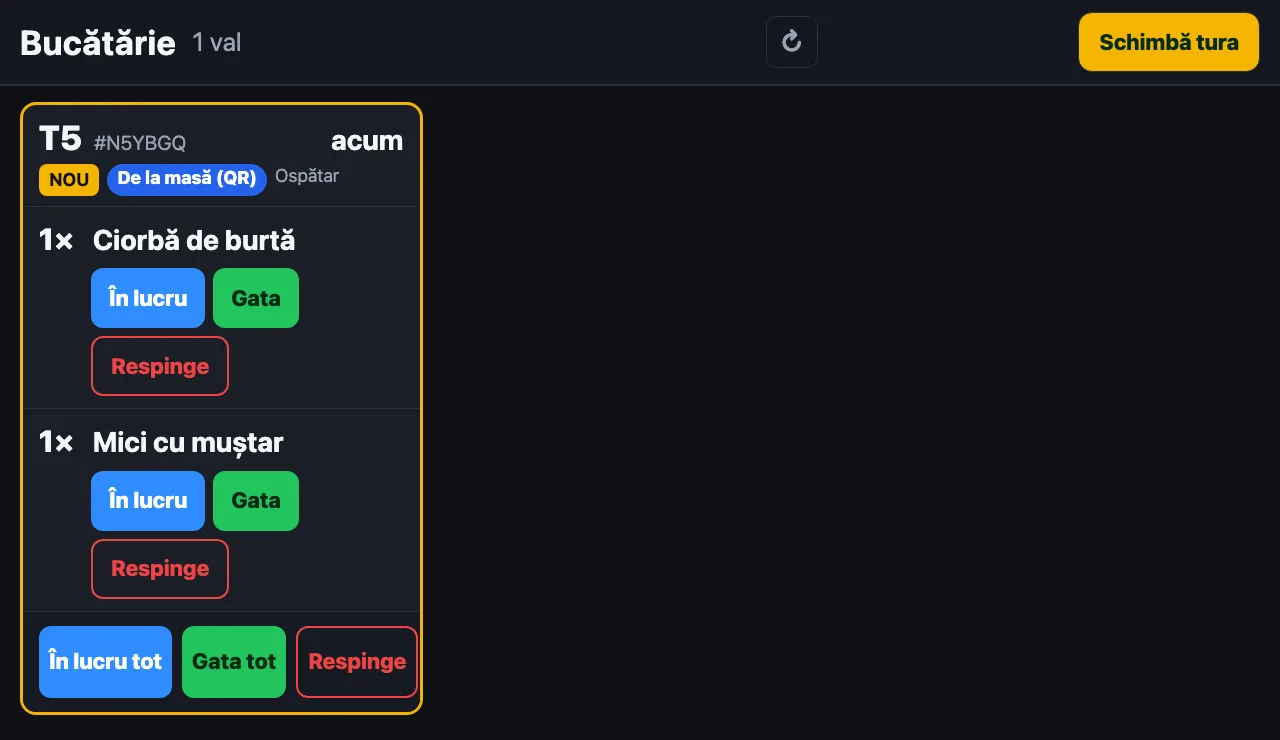
Each station has a wall screen that shows only its own lines, from every way in, in the order they arrived. A line is tapped when work starts and again when it is done. Once the station has finished, the waiter's app shows that the table can be served. The bar can also place an order on a table or at the counter itself, straight from its screen.
Delivery and the courier
The delivery area is a list of towns, each with its own fee, minimum order and delivery time, checked in the basket. A delivery order follows the same line of states and is handed to a courier, who picks it up in the app, opens the address in Google Maps or Waze, marks departure and handover, and records the payment. The restaurant can see at once what stage every order has reached.
Stock that counts itself down
Every sale deducts the stock items linked to the dish, with no manual count between deliveries. Each item can carry a minimum level. When it drops below that level, the item goes onto the shopping list by itself, and the list downloads ready to send to the supplier.
The figures, from a single source
Sales, closed tables, station times and the floor's indicators all come from one function, used by the dashboard, the daily report and the owner's app. Test orders and test accounts are left out automatically. The working day runs until the morning, so a long evening is not split in two at midnight.
The team app, on Android and iOS
One app for the whole team, on Android and iOS, that shows each person only what their role needs: the floor for a waiter, deliveries for a courier, the whole restaurant for the owner. People sign in by scanning the restaurant's QR code and entering a personal PIN. If the network drops in the middle of service, orders wait on the phone and go out by themselves once the signal is back.
The floor, for waiters
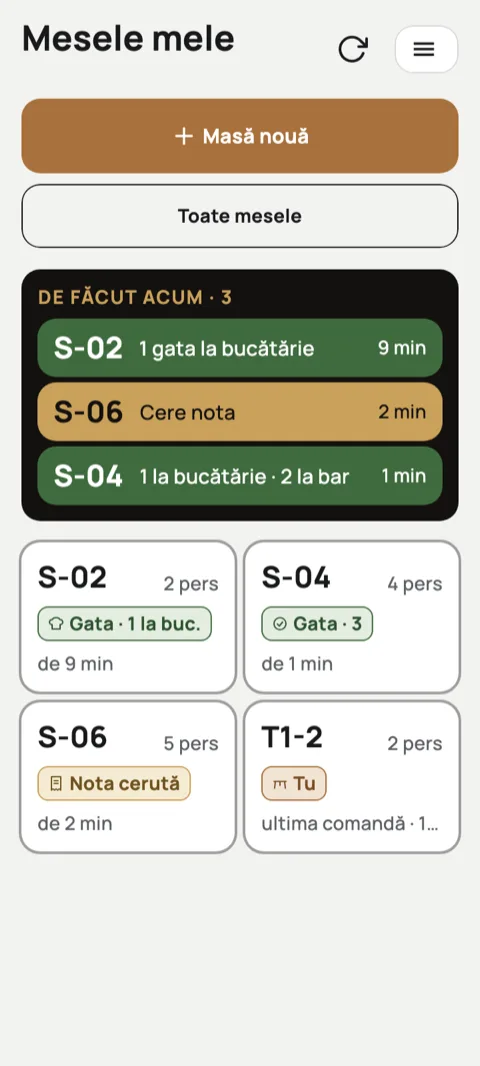
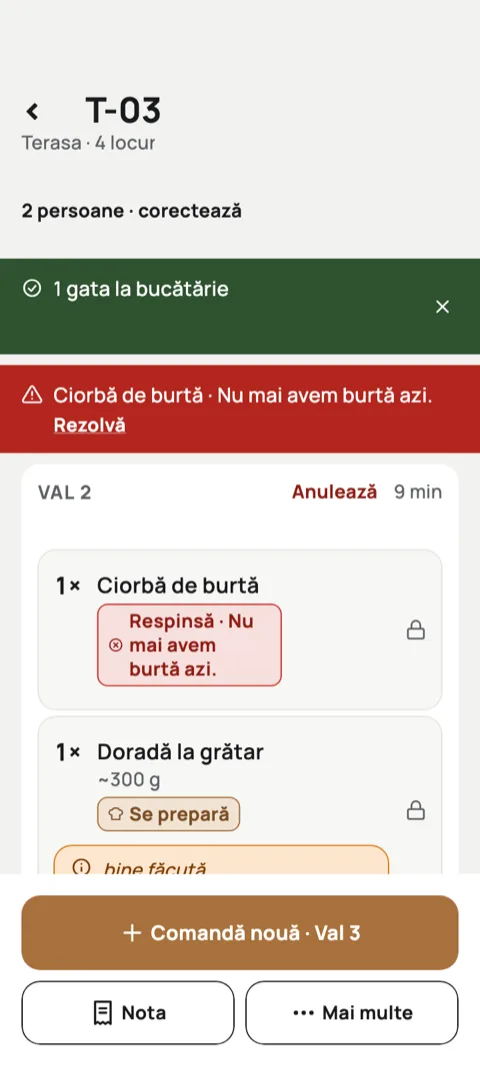
The floor plan with the waiter's own tables, opening a table, ordering in waves with sizes and extras, the bill and recording payment. Requests from the table QR code show up as a badge on the table, with Confirm, Change and Decline. The same screen covers the day's reservations, starting and closing a shift, and handing over the cash at the end.
The courier
A list of orders to deliver, with Take, On my way and Delivered. The address opens straight in Google Maps or Waze. Payment, cash or card at the door, is recorded at handover.
The owner
Home, Live, Alerts, Reports and Targets cover the day's sales, the open tables and what is happening in the restaurant right now, plus reports over any period, all from the same figures as the dashboard.
In detail
A restaurant takes five kinds of order: the one placed on the website, the one read out over the phone, the one taken at the table, the one a guest sends from the QR code and the one the bar enters from its own screen. Each one starts in a different situation and follows different rules. A public checkout has to check the delivery area, the opening hours and the minimum order. A table is already seated and needs none of that. Restaurant OS keeps the five apart at the door and handles them the same way after it.
That is why a new restaurant starts from configuration rather than code: its menu, tables, delivery area, stations and the modules it uses. Erra is the most recent example. It has a pub and a terrace with their own plans, kitchen and bar screens, delivery across Ploiești and the towns around it, a daily menu and stock that counts down with every sale. It runs on the same platform on which Pizza pe Bune passed 469 orders in its first two months.
Stack
- Laravel
- Livewire
- Filament
- Flutter
- Reverb
- MariaDB
Capability
- Online orders
- Table service
- Kitchen
- Staff app
- Mobile applications
- Stock
Screens
Contact